Neck Pain Treatment in Kiel, WI
Neck pain doesn't always have the same cause, so it shouldn't automatically receive the same treatment.
If you are looking for neck pain treatment in Kiel, WI, at Restorative Chiropractic, care begins by understanding your symptoms, evaluating how your neck and surrounding areas are functioning, and determining what appears to be contributing to the problem.
Treatment is then selected based on your individual presentation. Depending on what is found, care may include computer-aided chiropractic adjustments, dry needling, Class IV laser therapy, soft-tissue treatment, or a combination of approaches when appropriate.
The goal isn't to automatically perform the same treatment for every case of neck pain. It's to choose treatment intentionally, pay attention to your response, and adapt when necessary.
Neck Pain Isn't the Same for Everyone
Two people can both say, “My neck hurts,” while having very different symptoms and clinical findings.
For one person, neck pain may primarily involve stiffness and restricted movement. Another may have significant muscle tension or tenderness. Others may experience headaches, pain extending toward the shoulder or upper back, or symptoms traveling into the arm or hand.
That's why treatment shouldn't begin with the assumption that every person with neck pain needs the same thing.
It begins with an evaluation.
How I Approach Neck Pain
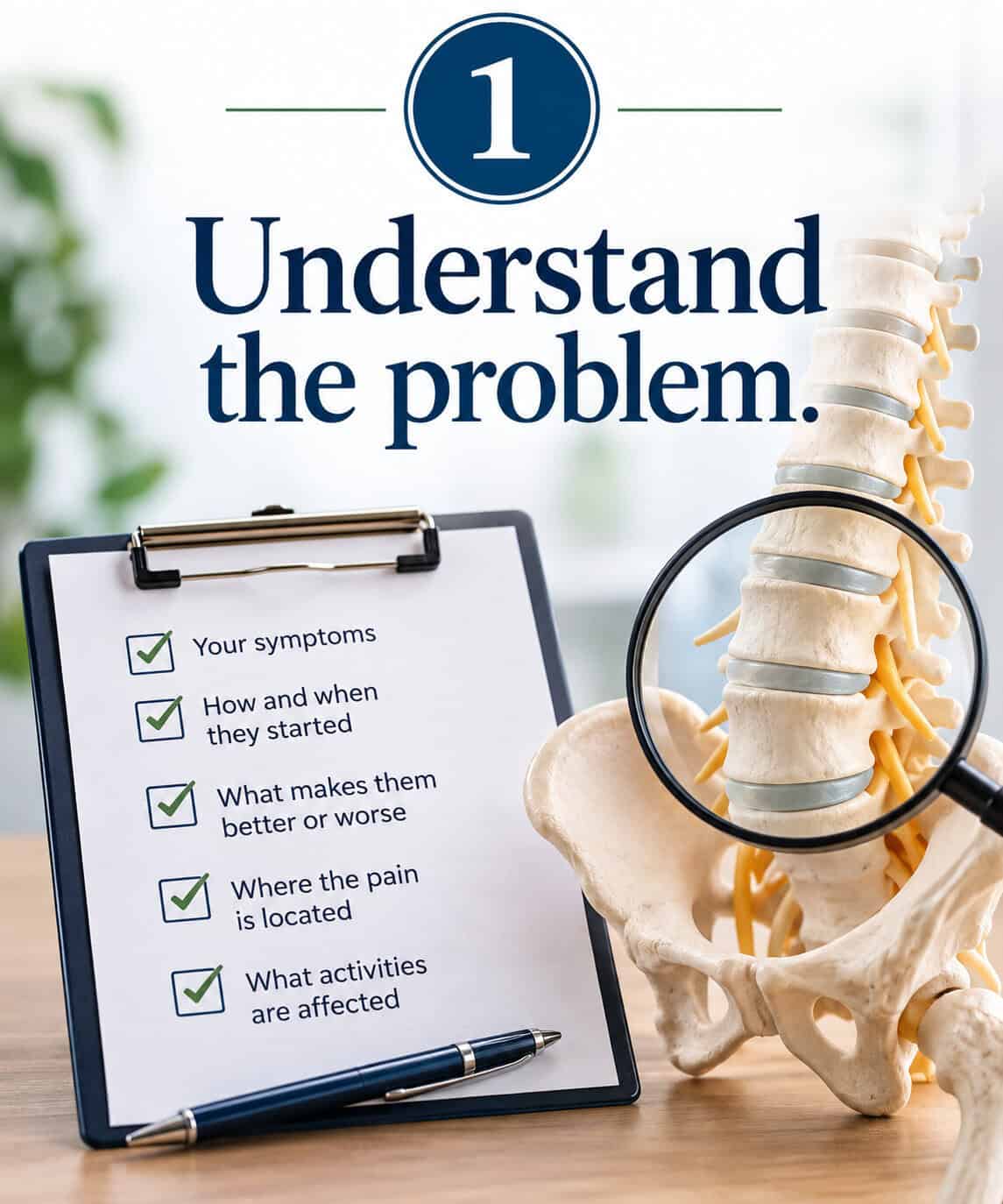
1. Understand the Problem
The first step is learning about your symptoms and evaluating the areas that may be contributing to them.
That may include considering:
- Where is the pain located?
- When and how did it begin?
- Which movements or positions make it better or worse?
- Is neck movement restricted?
- Is there significant muscular tension or tenderness?
- Do symptoms extend into the shoulder, arm or hand?
- Are numbness, tingling or weakness present?
- Are headaches associated with the neck symptoms?
- Have previous treatments helped?
- Are there findings suggesting that additional medical evaluation is appropriate?
The objective is to develop a clearer picture of the problem before deciding how to treat it.
2. Choose Treatment Intentionally
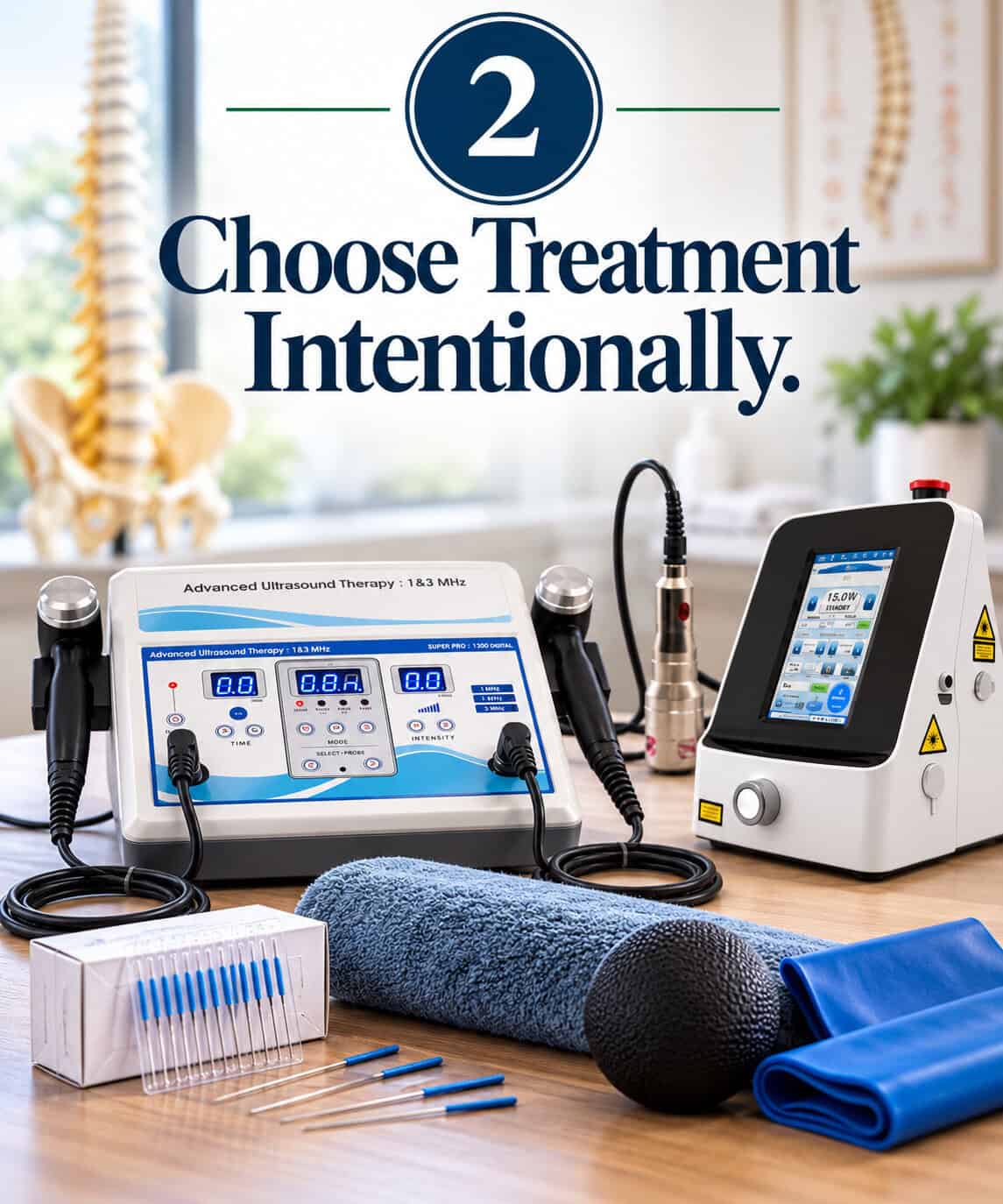
Once I've evaluated your neck, treatment is selected according to the findings rather than simply because you scheduled a chiropractic appointment.
Not everyone needs the same type of adjustment. Not everyone needs dry needling, laser therapy or soft-tissue treatment. And not every patient necessarily needs an adjustment at every visit.
Having different treatment options allows me to select an approach that makes sense for the individual patient and presentation.
3. Pay Attention to Progress
What happens after treatment matters.
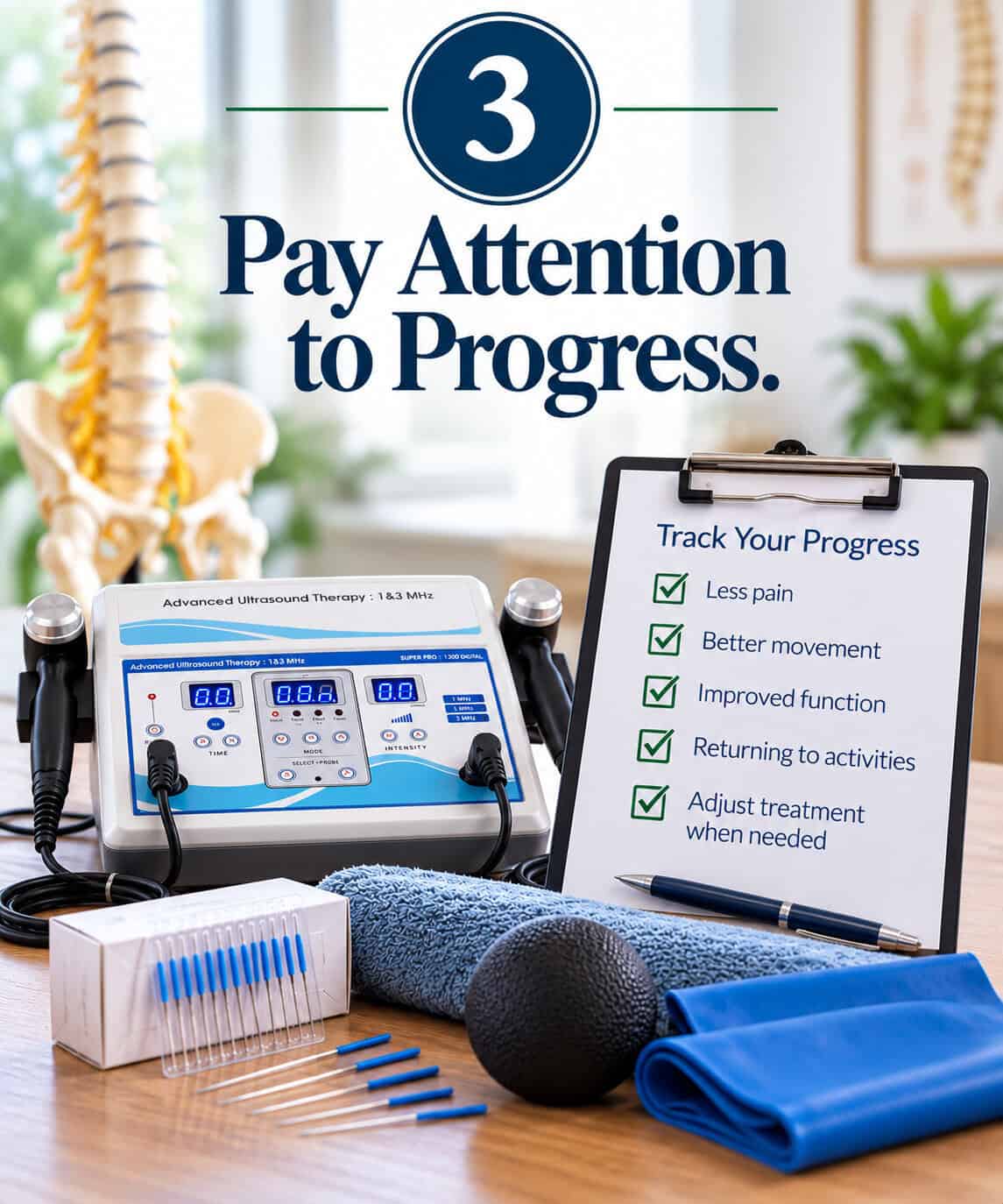
Changes in pain, movement, function and other symptoms provide useful information about how you are responding to care.
If you're improving, that response helps guide what comes next. If you're not improving as expected, that is also important clinical information.
Treatment shouldn't become disconnected from the patient's response to it.
4. Adapt When Necessary
If an approach isn't producing the desired response, continuing to do exactly the same thing isn't automatically the next step.
Treatment may be modified. A different approach may be considered. The combination of treatments may change. In some circumstances, additional evaluation or referral to another healthcare provider may be appropriate.
That's what I mean by progress-oriented, individualized care.
Treatment Options for Neck Pain at Restorative
The treatment that is appropriate for neck pain depends on the individual presentation. Having several different clinical tools available gives us options rather than requiring every patient to receive the same approach.

Computer-Aided Chiropractic Adjusting
At Restorative, I use the Impulse iQ computer-aided adjusting instrument as an alternative to traditional manual manipulation.
Computer-aided doesn't mean computer-determined.
I still use my hands and clinical judgment to assess joint movement, identify anatomical landmarks and areas of restriction, establish the appropriate contact, and determine the direction of the adjustment.
I determine where and how to adjust. The instrument delivers the adjusting thrust.
For patients who are uncomfortable with traditional manual neck manipulation—or simply prefer a different approach—instrument adjusting provides another option.

Dry Needling
Muscles can sometimes be an important component of neck pain.
When examination findings indicate that muscular or myofascial involvement may be contributing to the problem, dry needling may be incorporated into treatment.
Thin filiform needles are placed into selected muscular or soft-tissue areas according to the individual presentation.
Dry needling isn't automatically performed for neck pain. It is another treatment option that can be selected when appropriate.
Class IV Laser Therapy
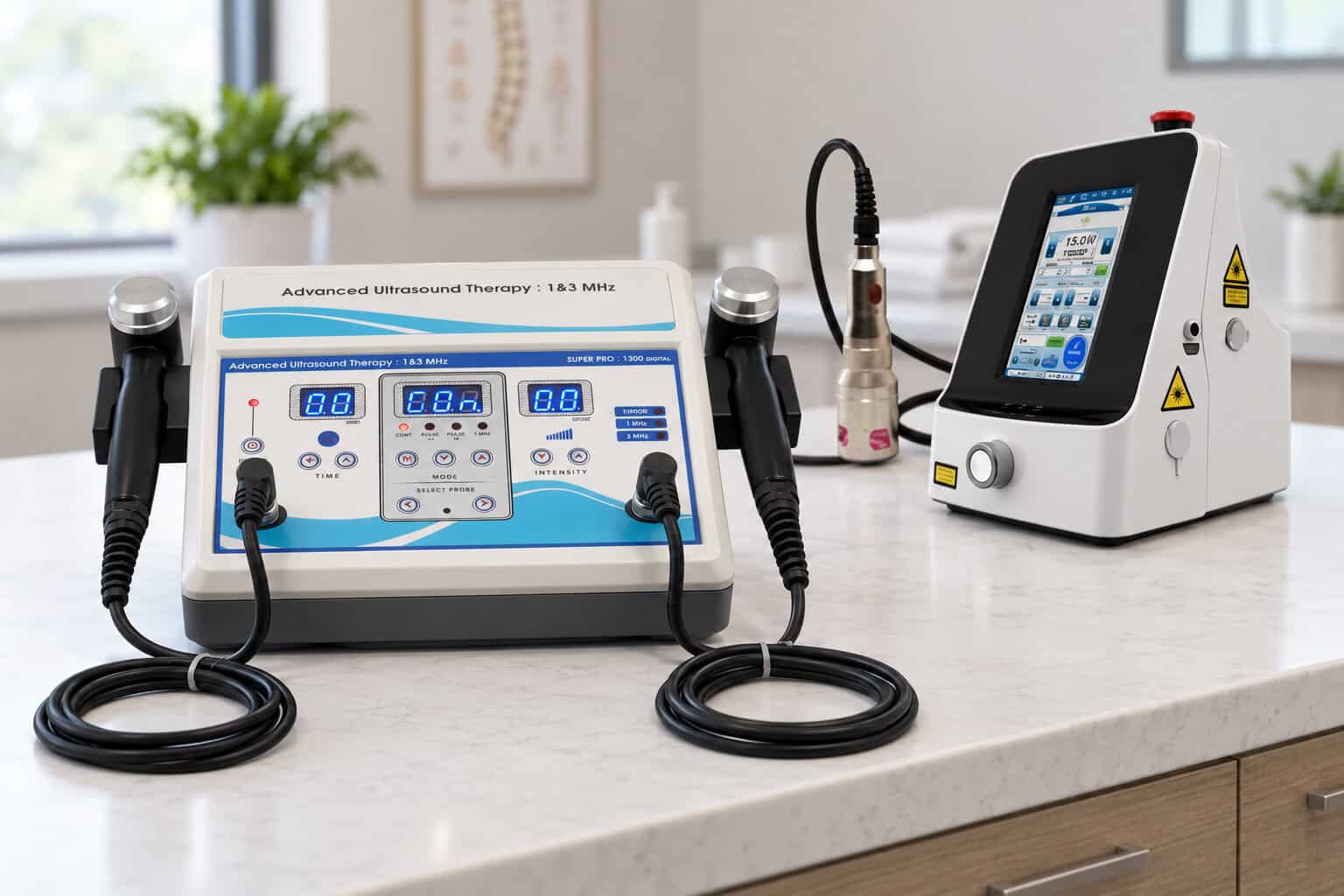
Class IV laser therapy is another treatment option available at Restorative for appropriate musculoskeletal presentations.
Whether laser therapy is incorporated into neck pain treatment depends upon the individual patient's presentation and treatment goals. It is not automatically included simply because someone has neck pain.

Soft-Tissue Treatment and Other Approaches
Neck pain may involve more than joint movement alone. Muscles and other soft tissues of the neck, shoulders and upper back may also be relevant.
When appropriate, these areas can be addressed as part of the treatment approach.
The important point isn't the number of treatments available. It's having different clinical tools available and choosing among them intentionally.
What Can Cause Neck Pain?
Neck pain can have many potential contributors. These may include muscles and other soft tissues, joints of the cervical spine, discs, irritated spinal nerves, injuries, repetitive activities, prolonged positioning and other mechanical stresses.
Sometimes several factors may contribute to a person's symptoms at the same time.
This is another reason why the symptom “neck pain” by itself doesn't determine the treatment.
Neck Pain With Shoulder, Arm or Hand Symptoms
Neck-related symptoms aren't always confined to the neck.
Some people experience pain extending into the shoulder blade, shoulder or arm. Others may experience numbness, tingling, burning or weakness involving the arm or hand.
There are multiple possible causes for these symptoms, and not every case of arm pain or tingling originates from the same structure.
The location, behavior and neurological characteristics of these symptoms are therefore important parts of the evaluation.
Neck Pain and Headaches
Some people with neck pain also experience headaches.
Muscles, joints and other structures of the upper neck can sometimes be associated with headache symptoms. However, headaches have many possible causes, and the presence of both neck pain and headaches does not automatically establish that one is causing the other.
Evaluation helps determine whether the neck appears to be a relevant component of the presentation and whether chiropractic or other treatment at Restorative is appropriate.
When Should Neck Pain Be Medically Evaluated?
Many episodes of neck pain are musculoskeletal, but certain symptoms warrant prompt medical evaluation.
Seek appropriate medical attention for symptoms such as significant new weakness, substantial loss of coordination, severe or rapidly worsening neurological symptoms, neck pain following significant trauma, fever or systemic illness associated with neck pain, or other unusual or concerning symptoms.
If my evaluation suggests that chiropractic treatment isn't appropriate or that additional medical evaluation is warranted, I'll recommend the appropriate next step rather than treating something that should be evaluated elsewhere.
What Does “Individualized Care” Mean at Restorative?
You'll see the phrase individualized care used frequently in healthcare.
At Restorative, I want that phrase to mean something specific.
Individualized care means treatment isn't predetermined simply because you scheduled a chiropractic appointment.
Your history and examination help determine which approaches are appropriate. Two people with similar neck pain may not necessarily receive identical treatment, and treatment may change over time depending upon how you respond.
In practical terms, the process looks like this:
Evaluate → Identify relevant findings → Select treatment → Monitor response → Adapt when appropriate.
That's the model I use when approaching neck pain and other musculoskeletal problems.
Frequently Asked Questions About Neck Pain Treatment
No. Treatment is selected according to the individual presentation and examination findings. An adjustment may be appropriate for some patients, while other approaches may be used instead of or in addition to chiropractic adjusting.
My primary chiropractic adjusting approach uses the computer-aided Impulse iQ instrument rather than traditional manual manipulation. I still perform hands-on assessment and determine the appropriate contact and direction of the adjustment; the instrument delivers the adjusting thrust.
Restorative Chiropractic & Dry Needling does not bill or process health insurance. Fees are transparent and paid directly, so you know the cost of care without waiting for an insurance claim to be processed.
It may be appropriate when muscular or myofascial findings appear to be contributing to the presentation. Dry needling is selected according to the individual patient's findings rather than automatically performed for everyone with neck pain.
Lack of expected progress is clinically meaningful. The treatment approach may need to be reconsidered or modified, or additional evaluation may be appropriate. Monitoring response is part of deciding what should happen next.
Neck Pain Care in Kiel, Wisconsin
If you're looking for neck pain treatment in Kiel, the first question doesn't necessarily need to be:
“What treatment do you use for neck pain?”
A better question is:
“What appears to be contributing to my neck pain, and which treatment makes sense for me?”
That's the question I want to answer before deciding how to treat you.
Restorative Chiropractic & Dry Needling — Kiel, Wisconsin